
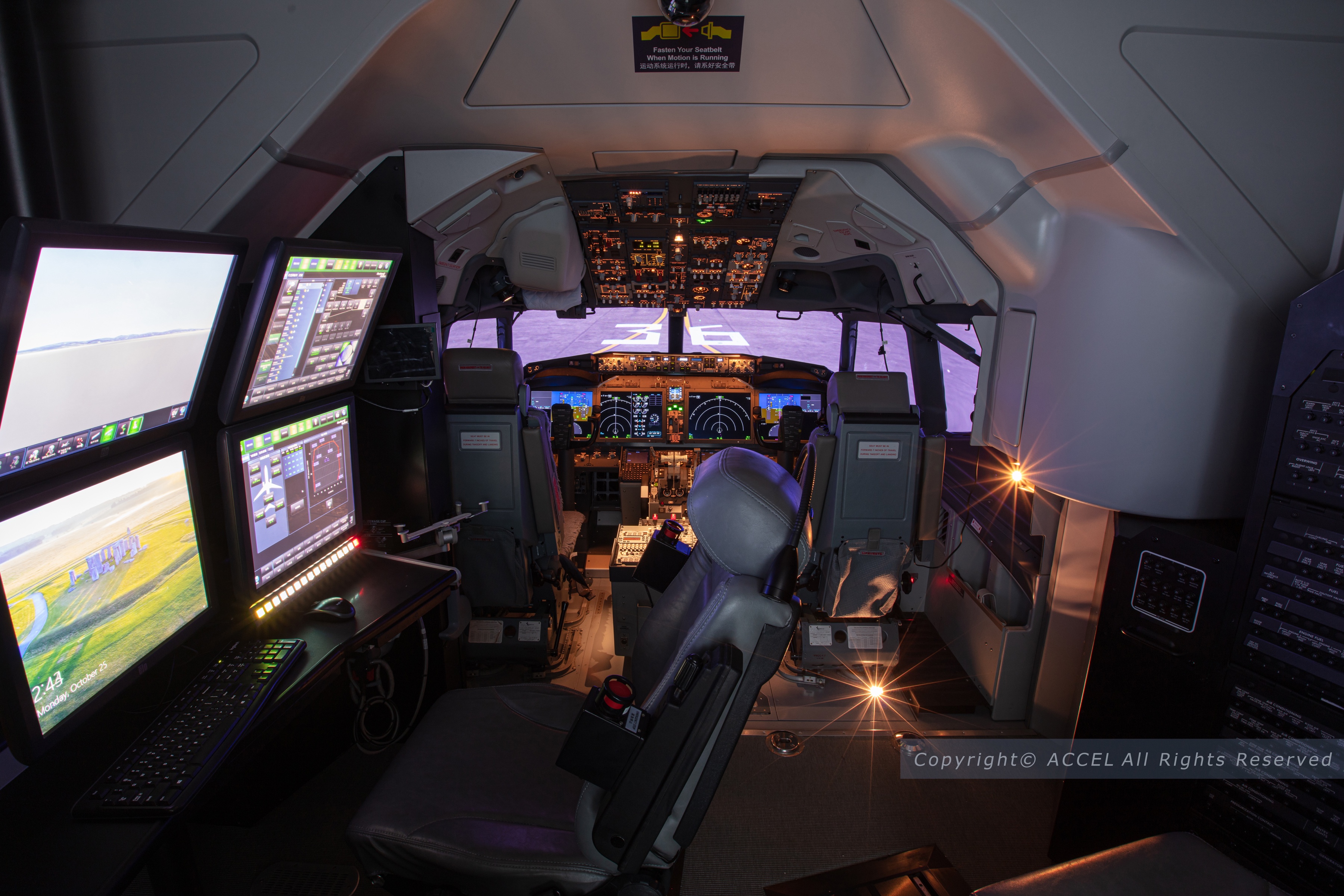
PARIS, June 20, 2017. At the 52nd Paris Air Show, ACCEL announced that its first delivered Boeing 737 Next Generation full flight simulator (FFS) had received Level D qualification from the Civil Aviation Administration of China. The device was qualified at Haite’s Aviation Safety Training center in Tianjin.
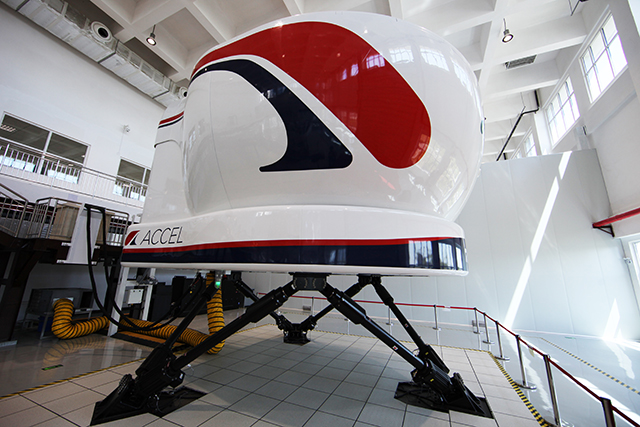
“ACCEL is committed to supplying high-quality, high-fidelity simulators to customers around the world,” said Scott Watson, then general manager of ACCEL. “This first delivery shows our commitment to meeting training standards and continuing to improve.”
“The qualification is another milestone for China’s aviation industry,” said Li Jiangshi, then chair of ACCEL’s board. “It demonstrates that China can develop, design and manufacture full flight simulators at the highest qualification level for Western aircraft platforms.”
About ACCEL
At the time of the announcement, ACCEL was a joint venture between Haite High-Tech and Rockwell Collins. Formed in 2016 as a simulation and training center of excellence, the Tianjin-based company designed, developed, manufactured and sold civil flight simulators. It drew on both parent companies’ training and engineering expertise to supply simulators, technical assistance and year-round, round-the-clock support for multiple civil aircraft platforms.
About Haite Group
Founded in 1991, Haite Group is a diversified Chinese group focused on aviation and industry. At the time of the report, it had more than 40 subsidiaries and branches, including the listed Sichuan Haite High-Tech Co., Ltd. (Shenzhen: 002023). Haite High-Tech was China’s first privately owned aviation maintenance company and the first publicly listed company in China’s integrated aviation technical services sector. It also provided aviation training through centers in Singapore, Kunming and Tianjin.
About Rockwell Collins
At the time, Rockwell Collins (NYSE: COL) provided integrated aviation solutions for commercial and government customers worldwide. Its systems supported flight crews in navigation, military pilots in communications and situational awareness, airlines and airports in exchanging messages, and passengers in staying connected and comfortable. Its portfolio included flight deck avionics, cabin electronics and interiors, information management, mission communications, and simulation and training.